ANALYSIS
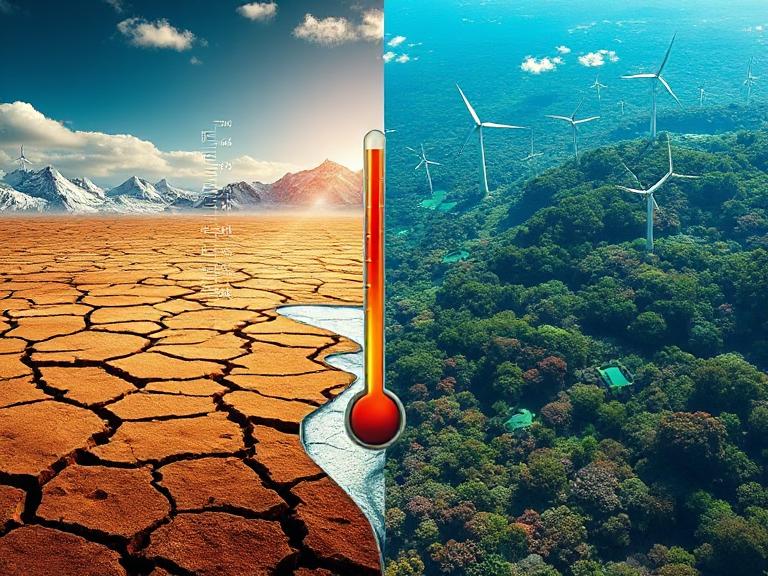
As mid-2025 unfolds, the undeniable acceleration of the climate crisis continues to dominate global headlines, serving as a stark reminder of humanity’s profound impact on the planet. Scientific data unequivocally points to a consistent trend of rising global temperatures, with the first quarter of 2025 registering as the second warmest on record, following closely behind the record-setting warmth of 2024. This persistent warmth is particularly concerning given the presence of weak La Niña conditions during early 2025, a phenomenon typically associated with cooler global temperatures. The fact that temperatures remained near-record highs despite this cooling influence underscores the strength of the underlying warming trend driven by human-caused greenhouse gas emissions.
Beyond the generalized temperature increases, the climate crisis is manifesting in alarming and varied ways across the globe. Both Arctic and Antarctic sea ice extents have consistently hovered at record or near-record lows throughout early 2025, further exacerbating concerns about rising sea levels and the disruption of critical polar ecosystems. The World Meteorological Organization’s reports on glacier retreat paint an equally grim picture, with five of the past six years witnessing the most rapid glacier loss on record, and the period of 2022-2024 marking the largest three-year loss of glacier mass. These melting glaciers contribute significantly to rising sea levels and threaten freshwater supplies for millions.
The impacts are not limited to the poles. NOAA confirmed in April 2025 that the Earth was experiencing its fourth global coral bleaching event, described as the biggest to date. Over 83% of the world’s coral reef area has been impacted by bleaching-level heat stress, with mass coral bleaching documented in at least 83 countries. This ecological catastrophe has devastating consequences for marine biodiversity, fisheries, and coastal communities that rely on healthy coral ecosystems. Simultaneously, extreme weather events are becoming more frequent and intense. A slow-moving storm system in the US in April 2025 brought over 150 tornadoes and widespread flooding, underscoring the increasing frequency of severe convective storms in a warming climate. Similarly, a February 2025 heatwave in South Sudan was found to be at least 2°C hotter and ten times more likely due to climate change, highlighting the disproportionate impact on vulnerable populations.
The urgency of the situation has intensified calls for concerted global action. While the transition to renewable energy sources is underway, its pace remains insufficient to meet the ambitious targets required to limit global warming. International collaboration and multilateral agreements are crucial, yet often hampered by geopolitical complexities and competing national interests. There is a growing recognition of the need for “environmental justice” – ensuring that the burden of climate change does not fall disproportionately on communities least responsible for the emissions.
The scientific community continues to refine its understanding of climate sensitivity and the feedback loops that could accelerate warming. Some studies in early 2025 even suggest that previous assessments, such as those by the IPCC, may have underestimated certain warming effects. This underscores the need for continuous research and adaptation strategies that are flexible and robust enough to respond to evolving climate patterns. The future of humanity hinges on the ability of nations to move beyond rhetoric and implement concrete, binding commitments to decarbonize economies, invest in climate adaptation and resilience, and protect the planet’s fragile ecosystems. The window for effective action is rapidly closing, and the stakes could not be higher.