ANALYSIS
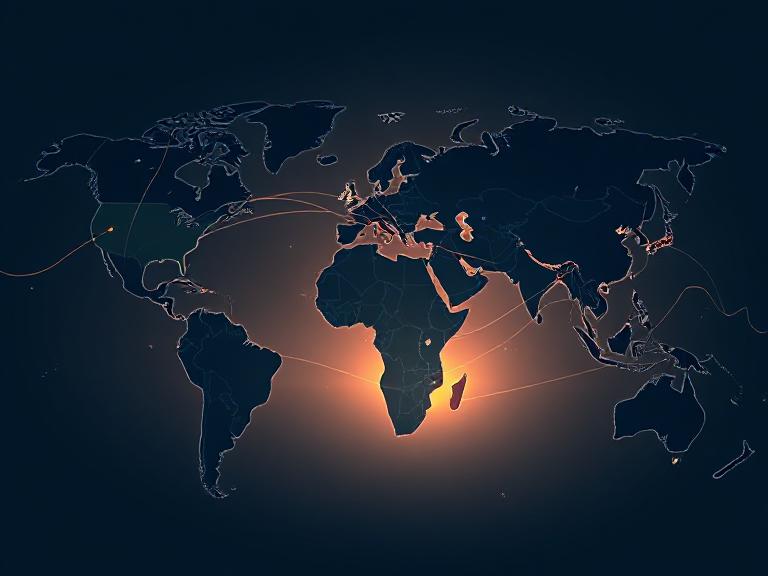
The global economic landscape in mid-2025 finds itself at a precarious juncture, marked by escalating trade tensions and a pervasive sense of policy uncertainty. Projections from various international bodies, including the United Nations and the European Commission, paint a picture of decelerating growth, with global economic expansion anticipated to slow to 2.4% in 2025, a notable downgrade from previous forecasts. This downturn is broadly based, impacting both developed and developing economies, and is primarily driven by a resurgence of protectionist measures, most notably the imposition of higher tariffs by major economic powers.
The United States, for instance, has seen a significant increase in its effective tariff rate, eliciting retaliatory responses and creating a complex web of trade disputes. These tariffs are not merely abstract economic policies; they have tangible effects on strategic and operational decisions for businesses worldwide. They strain global supply chains, drive up production costs, and delay critical investment decisions, contributing to financial market volatility. The concept of “friend-shoring” – the practice of relocating supply chains to politically aligned countries – is gaining traction as businesses seek to build resilience against these geopolitical shocks. This shift, while aimed at reducing vulnerabilities, also contributes to the fragmentation of the global economy and the emergence of new economic “nodes” outside of traditional investment centers.
For many trade-reliant developing countries, the situation is particularly challenging. They face mounting difficulties from reduced exports, lower commodity prices, tighter financial conditions, and elevated debt burdens. While inflation is easing globally in some sectors, short-term risks from tariff-driven cost pressures and lingering uncertainty continue to pose significant policy challenges. Addressing these requires a broad toolkit that combines prudent monetary policy, targeted fiscal measures, supply-side reforms to enhance domestic production capabilities, and industrial strategies aimed at stabilizing prices and fostering resilience.
Beyond the immediate economic impacts, these trade tensions are also reshaping global power dynamics. The rivalry between the U.S. and China, for example, is intensifying across various domains, including trade, technology, and military leverage. This competition extends to critical technologies like artificial intelligence and quantum computing, leading to the formation of technological blocs and jeopardizing international cooperation. The implications for innovation and global access to cutting-edge advancements are significant.
The future of the multilateral world order is also under scrutiny. The shift towards multi-polarity, with India, China, the U.S., the European Union, and other regional powers vying for influence, is redefining international relations. While multilateralism is crucial for addressing global challenges, fostering cooperation, and promoting sustainable development, the current climate of trade disputes makes effective collaboration more difficult. The UN emphasizes the need for stronger policy coordination and regional trade agreements to restore confidence and keep development on track.
In essence, the world economy is navigating a period of profound re-calibration. The prevailing sentiment is one of caution and a heightened awareness of risk. Businesses are being urged to move from reactive to proactive geopolitical risk management, improving resilience through strategies like diversified supply chains and robust cybersecurity. The ongoing challenges highlight the interconnectedness of global economies and the urgent need for renewed dialogue and collaboration to mitigate the risks of conflict and foster a more stable and prosperous future for all.