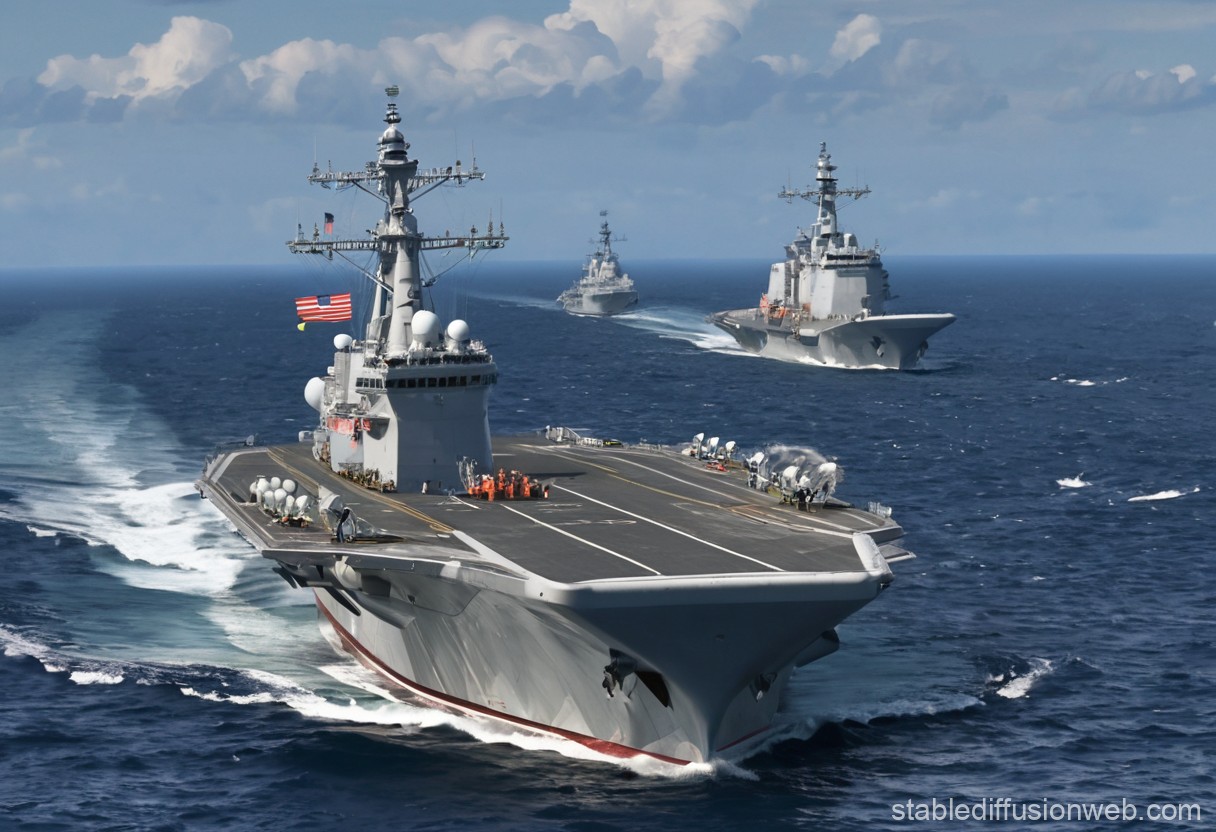
The South China Sea remains a significant area of geopolitical concern as tensions continue to escalate between claimant states. Recent developments, including increased naval deployments and assertive rhetoric, have heightened the risk of miscalculation and potential conflict. The strategic importance of the waterway, crucial for global trade and rich in natural resources, makes it a focal point of competing territorial claims and maritime boundaries. International efforts to mediate the disputes and establish a code of conduct have yielded limited progress, with unilateral actions by various parties further complicating the situation.
The involvement of external powers, particularly the United States, which maintains a strong naval presence in the region to ensure freedom of navigation, adds another layer of complexity to the issue. Regional alliances and security pacts are being tested as countries navigate their relationships with major global players. The potential for economic disruption due to instability in the South China Sea has far-reaching implications for global supply chains and energy security. Diplomatic solutions remain the preferred path, but the current trajectory suggests a continued period of heightened vigilance and careful management of the competing interests in this vital maritime region.